rushdaav.com

Uncategorized

ChatGPT SEO: How to Optimize Your Content for AI Search
Uncategorized

ChatGPT SEO: How to Optimize Your Content for AI Search

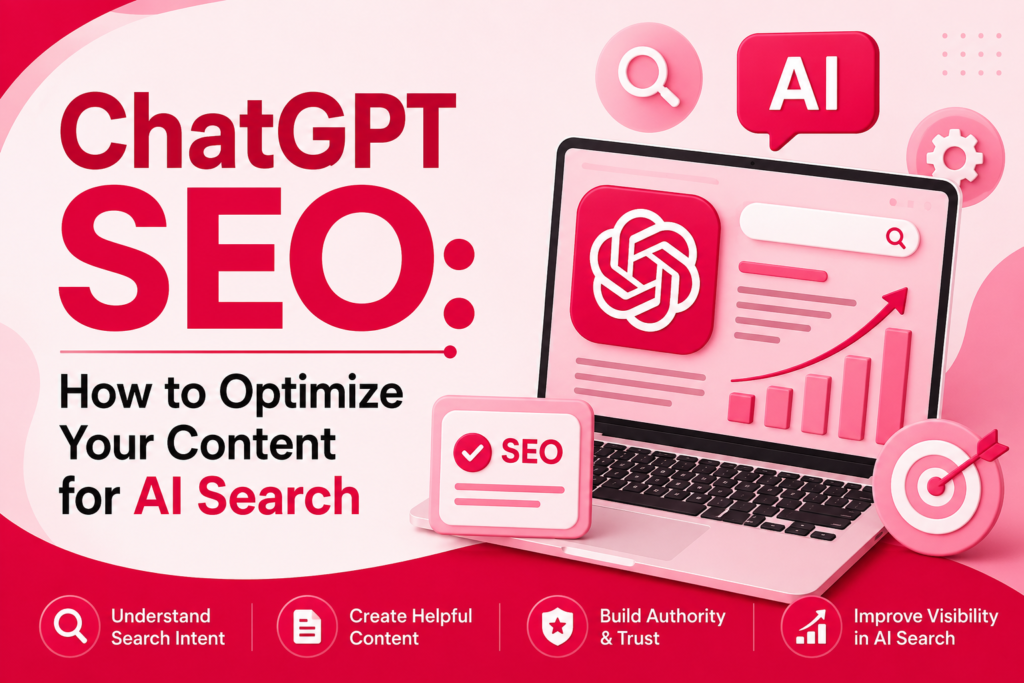
Chat GPT SEO: How to Optimize Your Content for AI Search Search is changing. People are no longer using search engines only to find websites. Many users now ask AI tools questions and expect clear, direct answers. This has created a new area of SEO called AI Search Optimization. ChatGPT SEO is about creating useful and well-organized content that can be easily understood by AI-powered search systems while still providing a great experience for human readers. If you have a blog, business website, or online store, understanding AI search can help you prepare your content for the future of search. What Is Chat GPT SEO? ChatGPT SEO is the process of creating and improving online content so that AI-powered search and answer systems can better understand the information. Traditional SEO mainly focuses on helping web pages appear in search engine results. AI search focuses more on understanding: What the user is asking What information they need The meaning behind their question Which sources provide useful information How different topics are connected For example, instead of searching: “best social media tools” a person might ask: “What are the best free social media tools for a small business?” AI search is designed to understand this type of detailed question.   Why Is AI Search Important? AI is changing how people find information online. Users want answers that are: Fast Simple Relevant Personalized Easy to understand Because of this, businesses need to create content that answers real questions instead of simply adding keywords to a page. AI search does not mean traditional SEO is no longer useful. Good SEO practices are still important. The goal is to combine traditional SEO with useful, clear and trustworthy content. How to Optimize Content for AI Search 1. Understand Your Audience Before writing an article, think about your audience. Ask yourself: Who will read this article? What problem are they facing? What information are they looking for? What questions might they ask? Understanding your audience helps you create content that actually solves their problems. 2. Answer Questions Clearly Before writing an article, think about your AI search is often based on questions. Try to answer common questions related to your topic. For example, if you are writing about SEO, you can answer: What is SEO? Why is SEO important? How does SEO work? How can beginners improve SEO? Give a direct answer first and then provide more details. This makes your content easier for both readers and search systems to understand. audience. Ask yourself: Who will read this article? What problem are they facing? What information are they looking for? What questions might they ask? Understanding your audience helps you create content that actually solves their problems. 3. Use Simple Language Avoid using complicated words when simple words can explain the same idea. For example: ❌ “Implementation of sophisticated optimization methodologies can facilitate enhanced digital visibility.” ✅ “Simple SEO strategies can help your website become more visible online.” Simple writing is easier to read and understand. 4. Create Helpful and Original Content Don’t create content just because you want to rank for a keyword. Create content that provides something useful. You can add: Your own experiences Practical tips Examples Case studies Original ideas Step-by-step instructions Helpful statistics Original and useful information can make your content more valuable to readers. 5. Use Keywords Naturally Keywords are still important, but avoid using them too many times. For example, if your main keyword is: ChatGPT SEO you don’t need to repeat it in every paragraph. Use related terms naturally, such as: AI SEO AI search AI search optimization Search optimization AI-friendly content Conversational search Always focus on writing naturally. 6. Organize Your Content Properly Good structure makes an article easier to read. Use: Clear headings Short paragraphs Bullet points Numbered lists FAQs Examples For example: H1: ChatGPT SEO: How to Optimize Your Content for AI Search H2: What Is ChatGPT SEO? H2: Why Is AI Search Important? H2: How to Optimize Content for AI Search H3: Understand Your Audience H3: Answer Questions Clearly H3: Use Simple Language This structure helps readers quickly find the information they need.   7. Focus on Search Intent Search intent means understanding why someone is searching for something. For example, someone searching for: “digital marketing” may want to learn what digital marketing means. Someone searching for: “best digital marketing tools” may be looking for tool recommendations. Someone searching for: “how to learn digital marketing” probably wants a step-by-step learning guide. Your content should match the reason behind the search.   8. Build Trust With Your Content Trust is important for both readers and search systems. Make sure your content is: Accurate Helpful Updated Well researched Written clearly When using statistics or important facts, use reliable sources. Also, provide information about the author or business when appropriate. 9. Improve Your Website SEO Content is only one part of SEO. Your website should also have good technical SEO. Important areas include: Mobile-friendly design Fast loading speed Secure HTTPS connection Clear website navigation Proper headings Internal links Search-friendly URLs Optimized images XML sitemap A technically healthy website makes it easier for search engines and other systems to access your content. 10. Keep Your Content Updated Don’t publish an article and forget about it. Information can change quickly, especially in areas like: AI Digital marketing Technology Social media SEO Review your articles regularly and update outdated information. Add new examples, remove old information and make improvements when necessary. ChatGPT SEO vs Traditional SEO Traditional SEO and AI search optimization are closely connected. Traditional SEO AI Search Optimization Focuses on keywords Focuses on questions and topics Targets search results Targets conversational answers Uses search intent Uses deeper context and intent Builds website authority Builds trust and expertise Optimizes web pages Creates clear, useful information The best approach is not to choose one over the other. Use traditional SEO and AI-friendly content together. Common Chat GPT SEO Mistakes 1. Keyword Stuffing Using the same keyword again and again can make

Uncategorized

How AI Is Revolutionizing Digital Marketing

How AI Is Revolutionizing Digital Marketing Artificial Intelligence (AI) is reshaping the way businesses connect with customers. What once required hours of manual work can now be completed in minutes with AI-powered tools. From content creation and customer support to data analysis and personalized advertising, AI is helping marketers work more efficiently while delivering better experiences to their audiences. Digital marketing has become increasingly data-driven, and businesses that use AI can better understand customer behavior, predict market trends, and create campaigns that achieve stronger results. Whether you run a startup, an online store, or a large enterprise, AI has become a valuable partner in building smarter marketing strategies. This article explores how AI is transforming digital marketing, the benefits it offers, and why businesses should embrace AI to stay competitive in the digital age.   What Is AI in Digital Marketing? Artificial Intelligence in digital marketing refers to the use of intelligent software and machine learning technologies to automate tasks, analyze data, and make marketing decisions more efficiently. AI systems can process vast amounts of information, recognize patterns, and provide insights that help businesses improve marketing performance. Instead of replacing marketers, AI enhances their abilities by handling repetitive tasks and providing valuable recommendations based on real-time data. 1. Smarter Customer Insights One of AI’s greatest strengths is its ability to analyze customer data quickly and accurately. AI examines browsing history, purchasing behavior, social media interactions, and website activity to understand customer preferences. With these insights, businesses can: Identify target audiences more accurately Understand customer interests Predict future buying behavior Improve marketing strategies Better customer understanding leads to more effective campaigns and higher customer satisfaction. 2. Personalized Customer Experiences Modern customers expect brands to deliver relevant content and recommendations. AI makes personalization possible by tailoring messages, product suggestions, emails, and advertisements based on each user’s interests. Examples include: Personalized email campaigns Product recommendations in online stores Customized website experiences Individualized promotional offers Personalized marketing improves engagement, builds trust, and increases conversion rates. 3. Faster Content Creation AI-powered writing assistants help marketers generate ideas, draft blog posts, create social media captions, write product descriptions, and develop email campaigns more efficiently. Although AI speeds up content production, human creativity remains essential for adding originality, emotional connection, and brand personality. Benefits include: Faster content production Improved productivity Consistent publishing schedules More time for strategic planning 4. Better Search Engine Optimization (SEO) SEO is essential for increasing website visibility, and AI is making optimization more effective than ever. AI tools can: Discover valuable keywords Analyze competitors Improve content structure Suggest internal linking opportunities Identify technical SEO issues These insights help businesses create content that better matches user intent and improves search engine rankings. 5. Improved Advertising Performance Digital advertising platforms already use AI to optimize campaigns automatically. AI helps marketers by: Identifying high-performing audiences Adjusting bids in real time Testing multiple advertisements Predicting campaign performance Reducing wasted advertising spend As a result, businesses achieve better returns on their advertising investment. 6. AI Chatbots for Customer Support AI-powered chatbots provide instant responses to customer questions at any time of day. Chatbots can: Answer common questions Recommend products Schedule appointments Collect customer information Guide users through purchases This improves customer satisfaction while reducing the workload for customer service teams. 7. Predictive Analytics AI doesn’t just analyze past performance—it helps predict future outcomes. Predictive analytics enables businesses to: Forecast customer demand Identify future market trends Estimate campaign success Reduce marketing risks Make informed business decisions This proactive approach allows businesses to stay ahead of competitors. 8. Social Media Management Managing multiple social media platforms can be time-consuming. AI simplifies this process by helping marketers schedule content, monitor conversations, analyze engagement, and recommend the best posting times. AI can also identify trending topics and hashtags that increase content visibility and audience engagement. 9. Email Marketing Automation Email remains one of the highest-performing digital marketing channels. AI enhances email marketing by automatically selecting the best sending time, creating personalized subject lines, and segmenting audiences based on customer behavior. Benefits include: Higher open rates Better click-through rates Increased conversions Improved customer relationships Automation allows businesses to communicate with customers consistently without requiring constant manual effort. 10. Better Marketing Decisions Through Data Every digital marketing campaign generates valuable data. AI transforms this information into meaningful insights by identifying patterns that humans may overlook. Businesses can use AI-powered analytics to: Measure campaign performance Track customer journeys Improve marketing strategies Allocate budgets more effectively Increase overall return on investment Data-driven decision-making leads to smarter investments and long-term business growth. Challenges of Using AI in Digital Marketing While AI offers many advantages, businesses should also be aware of its limitations. Some common challenges include: Maintaining customer data privacy Avoiding over-reliance on automation Ensuring human creativity remains part of content creation Monitoring AI-generated content for accuracy Training employees to use AI tools effectively The best results come from combining AI efficiency with human expertise. Best AI Tools for Digital Marketers Many AI-powered platforms are helping marketers improve productivity and campaign performance. Popular categories include: AI writing assistants for blogs and social media SEO optimization tools AI-powered design platforms Marketing automation software Customer support chatbots Analytics and reporting tools Choosing tools that align with your business goals can significantly improve marketing efficiency The Future of AI in Digital Marketing Artificial Intelligence will continue to transform digital marketing in the coming years. Businesses can expect even greater personalization, smarter automation, voice search optimization, predictive customer experiences, and more advanced marketing analytics. Companies that embrace AI today will be better prepared to adapt to changing customer expectations and evolving technology. Rather than replacing marketers, AI will continue to support creative professionals by simplifying repetitive tasks and providing deeper insights for strategic decision-making. Final Thoughts Artificial Intelligence has become one of the most powerful innovations in digital marketing. It enables businesses to automate repetitive tasks, understand customer behavior, personalize marketing campaigns, improve search engine optimization, optimize advertising performance, and make better decisions using real-time data. However, successful digital marketing

Uncategorized

Top 15 Free AI Tools Every Digital Marketer Should Use in 2026

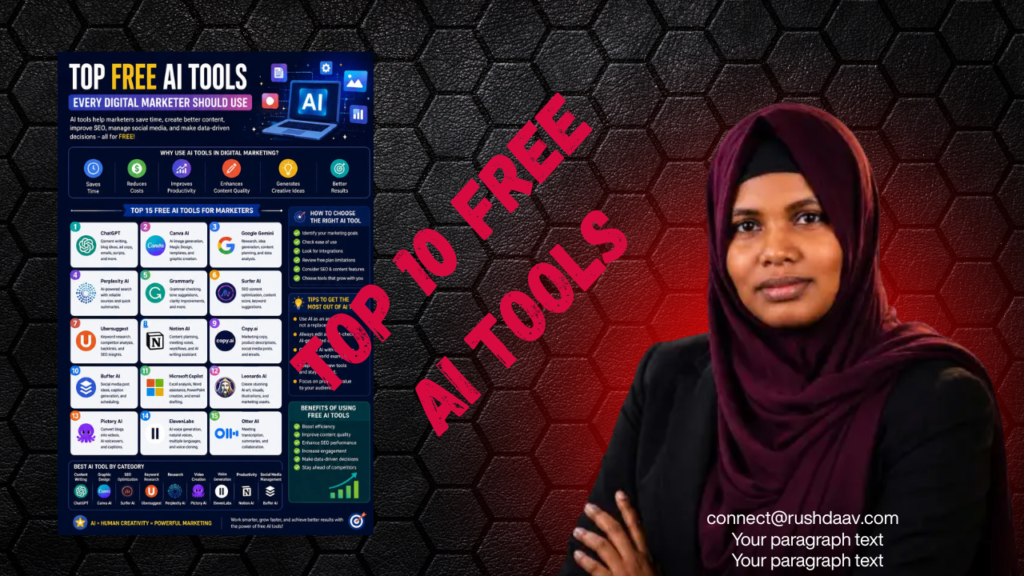
Top 15 Free AI Tools Every Digital Marketer Should Use in 2026 Artificial Intelligence (AI) has become one of the most valuable technologies for digital marketers. From writing content and designing graphics to improving SEO and managing social media, AI tools help businesses save time, reduce costs, and achieve better marketing results. The best part is that many powerful AI tools offer free plans, making them accessible for freelancers, startups, students, and small businesses. In this guide, you’ll discover 15 of the best free AI tools that every digital marketer should use in 2026. Why AI Tools Matter in Digital Marketing AI tools automate repetitive tasks and help marketers make smarter decisions using data. Instead of spending hours on content creation or keyword research, AI allows you to focus on strategy and creativity. Benefits of AI in Digital Marketing Saves valuable time Improves content quality Boosts SEO performance Enhances customer engagement Generates creative ideas Simplifies data analysis Increases productivity 1. ChatGPT Best For Content writing, brainstorming, email creation, blog outlines, ad copy, and customer support. Key Features Blog writing SEO content generation Social media captions Marketing strategy ideas Email writing Script writing Free Version Yes Why Marketers Love It ChatGPT helps marketers create high-quality content quickly while reducing writer’s block.   2. Canva AI Best For Graphic design and social media content. Features AI image generation Magic Design Background remover Presentation creation Social media templates Free Version Available with limited AI features 3.Google Gemini Best For Research, idea generation, and content planning. Features Research assistance Writing support Coding help Data analysis Marketing ideas 4. Perplexity AI Best For Finding reliable information with cited sources. Features AI-powered search Source citations Quick summaries Competitor research 5. Grammarly Best For Grammar correction and professional writing. Features Grammar checking Tone suggestions Plagiarism checking (premium) Clarity improvements 6. Surfer AI Best For SEO content optimization. Features Keyword suggestions Content score SERP analysis On-page SEO recommendations 7. Ubersuggest Best For Keyword research and SEO. Features Keyword ideas Domain analysis Competitor research Backlink overview 8. Notion AI Best For Project management and content planning. Features Meeting notes Content calendars AI writing assistant Workflow organization 9. Copy.ai Best For Marketing copy. Features Product descriptions Ad copy Email campaigns Social media captions 10. Buffer AI Assistant Best For Social media management. Features Caption generation Post scheduling Content ideas Performance tracking 11. Microsoft Copilot Best For Productivity and document creation. Features Excel analysis Word assistance PowerPoint creation Email drafting 12. Leonardo AI Best For Converting blogs into videos. Features Text-to-video Caption generation AI voiceovers Video editing 13. Pictory AI Best For Converting blogs into videos. Features Text-to-video Caption generation AI voiceovers Video editing 14. ElevenLabs Best For Professional AI voice generation. Features Natural voices Multiple languages Voice cloning Podcast narration 15. Otter AI Best For Meeting transcription. Features Automatic notes Meeting summaries Searchable transcripts Team collaboration How to Choose the Right AI Tool When selecting an AI tool, consider: Your marketing goals Ease of use Integration with existing tools Free plan limitations SEO and content capabilities Collaboration features Scalability as your business grows Best AI Tool by Category Category Recommended Tool Content Writing ChatGPT Graphic Design Canva AI SEO Surfer AI Keyword Research Ubersuggest Research Perplexity AI Email Writing Grammarly Video Creation Pictory AI Voice Generation ElevenLabs Social Media Buffer AI Productivity Notion AI Tips to Get the Most Out of AI Tools Combine AI with your own expertise rather than relying on it entirely. Review and edit AI-generated content to ensure accuracy and originality. Use AI for research, drafting, and optimization, but add unique insights and examples. Regularly test new AI tools to stay competitive as technology evolves. Frequently Asked Questions (FAQ) Which free AI tool is best for digital marketers? Chat GPT is one of the most versatile free AI tools because it supports content writing, brainstorming, email drafting, SEO ideas, and marketing strategies. Can AI tools improve SEO? Yes. AI tools can help with keyword research, content optimization, title generation, meta descriptions, internal linking suggestions, and readability improvements. Human review is still essential for quality and accuracy. Are free AI tools enough for beginners? Yes. Most beginners can accomplish content creation, design, SEO research, and social media management using free plans before deciding whether premium features are necessary. Is AI-generated content good for Google rankings? AI-generated content can perform well if it is original, accurate, useful, and written to satisfy user intent. Simply publishing unedited AI text is unlikely to produce the best results. Final Thoughts Free AI tools have transformed digital marketing by making advanced capabilities accessible to everyone. Whether you’re creating blog posts, designing social media graphics, researching keywords, or optimizing your SEO, these tools can save time and improve efficiency. The best approach is to combine AI with your own creativity, expertise, and strategic thinking to produce content that truly helps your audience.

Uncategorized

Top 10 Benefits of Digital Marketing for Business Growth

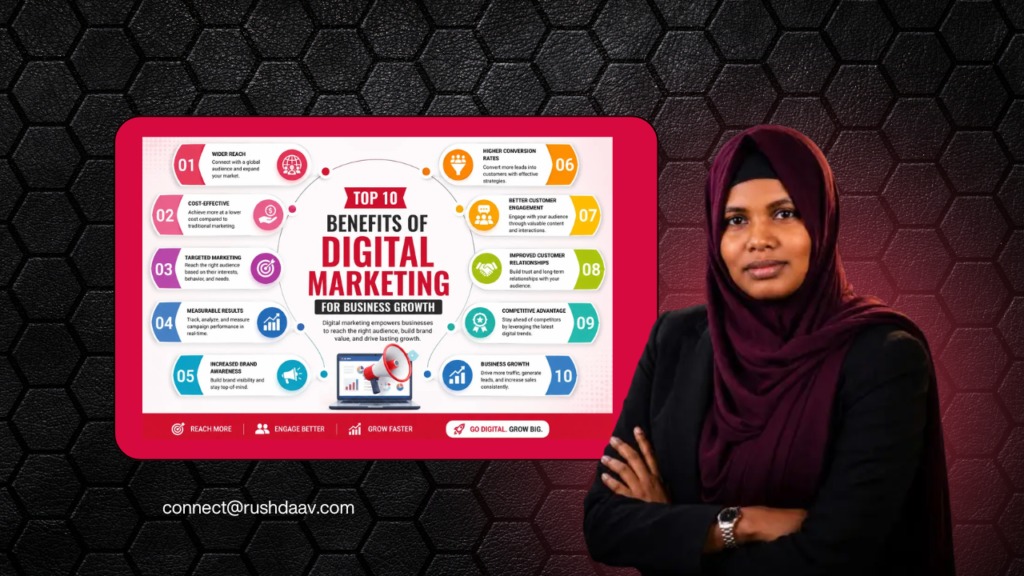
Top 10 Benefits of Digital Marketing for Business Growth In today’s fast-paced digital world, having an online presence is no longer optional—it is essential for business success. Consumers now search for products, compare services, read reviews, and make purchasing decisions online. This shift in customer behavior has made digital marketing one of the most effective ways for businesses to connect with their audience and achieve sustainable growth. Digital marketing uses online channels such as search engines, websites, social media platforms, email, and paid advertising to promote products and services. Unlike traditional marketing, it offers businesses the ability to reach the right audience, measure campaign performance, and continuously improve results. Whether you own a startup, a local business, or a growing company, digital marketing provides opportunities to attract customers, build brand awareness, and increase revenue. This article explores the top ten benefits of digital marketing and explains how it can help businesses grow in today’s competitive marketplace. 1. Expands Brand Awareness One of the greatest advantages of digital marketing is its ability to introduce a business to a larger audience. A professionally designed website, active social media profiles, and search engine visibility make it easier for potential customers to discover your brand. Consistently publishing useful content, engaging with followers, and maintaining a strong online presence help establish credibility. As more people recognize your business, they become more likely to trust your products or services. Key Benefits Reaches both local and international audiences Strengthens brand recognition Builds customer trust and credibility 2. Cost-Effective Marketing Solution Traditional advertising methods such as television commercials, newspapers, and billboards often require large budgets. Digital marketing provides affordable alternatives that can deliver excellent results even with limited resources. Businesses can start with a small advertising budget and gradually increase their investment as they achieve better results. This flexibility makes digital marketing suitable for startups and small businesses. Key Benefits Lower marketing costs Flexible campaign budgets Better return on investment   3. Reaches the Right Audience One of the biggest strengths of digital marketing is precise audience targeting. Businesses can display advertisements to people based on their location, age, interests, profession, purchasing behavior, and online activities. Instead of marketing to everyone, companies can focus only on people who are most likely to become customers. This improves campaign efficiency and reduces unnecessary spending. Key Benefits Better audience targeting Higher conversion rates Reduced advertising waste 4. Generates High-Quality Leads Digital marketing attracts customers who are already searching for products or services similar to yours. Through search engine optimization (SEO), content marketing, and paid search campaigns, businesses can connect with users who have genuine buying intent. Quality leads are more likely to convert into paying customers, resulting in increased sales and long-term business growth. Key Benefits Better lead quality Increased customer inquiries Higher sales opportunities 5. Improves Customer Engagement Customers appreciate businesses that communicate with them regularly. Social media platforms, email newsletters, blogs, and messaging applications allow businesses to answer questions, share updates, and build meaningful relationships. Regular interaction improves customer satisfaction and encourages repeat business. Key Benefits Stronger customer relationships Improved customer support Increased customer loyalty 6. Drives More Website Traffic A business website serves as the foundation of its online presence. Digital marketing techniques such as SEO, content marketing, social media promotion, and paid advertising encourage more visitors to explore your website. Higher website traffic increases opportunities to generate leads, make sales, and grow your customer base. Key Benefits More organic traffic Improved search engine rankings Greater business visibility 7. Provides Measurable Results Unlike traditional marketing, digital marketing allows businesses to monitor campaign performance in real time. Using analytics tools, marketers can measure website visits, customer behavior, conversions, engagement, and sales. This valuable data helps businesses understand what works, identify areas for improvement, and make smarter marketing decisions. Key Benefits Real-time performance tracking Accurate campaign analysis Better decision-making 8. Builds Customer Trust and Loyalty Trtust plays a major role in purchasing decisions. Businesses that consistently share valuable content, respond to customer questions, and maintain transparency develop stronger relationships with their audience. Publishing informative blog posts, customer success stories, testimonials, and educational videos demonstrates expertise and builds confidence among potential customers. Key Benefits Stronger brand reputation Increased customer confidence Higher customer retention 9. Increases Sales and Business Growth Digital marketing combines multiple strategies to guide customers through every stage of the buying journey. Whether someone is discovering your brand for the first time or returning to make another purchase, digital marketing helps move them toward conversion. By attracting qualified visitors, nurturing leads, and maintaining customer relationships, businesses can steadily increase revenue and achieve long-term growth. Key Benefits Higher sales conversions Increased revenue Sustainable business growth   10. Creates a Competitive Advantage Businesses that invest in digital marketing often stay ahead of competitors by adapting quickly to changing customer needs and market trends. Regular analysis, continuous optimization, and innovative marketing campaigns enable companies to improve their online presence and outperform competitors. A strong digital strategy helps businesses remain visible, relevant, and competitive in an increasingly digital marketplace. Key Benefits Better market positioning Strong online visibility Long-term competitive advantage Final Thoughts Digital marketing has become an essential part of modern business success. It enables companies to reach a wider audience, generate qualified leads, improve customer relationships, and increase sales while maintaining cost efficiency. With measurable performance data and flexible marketing strategies, businesses can make informed decisions and continuously improve their results. Whether you are launching a new business or looking to expand an existing one, investing in digital marketing is a smart decision. By combining search engine optimization, social media marketing, content creation, email marketing, and paid advertising, businesses can build a strong online presence and achieve sustainable growth in today’s competitive digital landscape.

Scroll to Top